If you’ve ever wondered how to clean wooden cutting board naturally without damaging its surface, you’re in the right place.
Wood can be a little tricky to care for – too much water warps it, and harsh chemicals ruin its finish.
But with the right approach, you can keep your board spotless, odor-free, and smooth without a single synthetic cleaner in sight.
This guide walks you through natural methods that actually work using everyday kitchen ingredients like lemon, vinegar, and baking soda.
You’ll learn how to lift stains, disinfect safely, and keep your board looking new for years to come.
Let’s get started.
How to Clean Wooden Cutting Board Naturally the Right Way
Wooden cutting boards are beautiful, durable, and kind on your knives – but they also need a bit more love than their plastic cousins.
Unlike plastic, wood is porous, which means it can absorb moisture, odors, and even bits of food if not properly cared for.
That’s why cleaning your wooden cutting board naturally is more than a good habit – it’s essential to keeping it safe and in great shape.
Here’s how to do it step-by-step.
1. Wipe and rinse immediately after use
Start by scraping off any food debris with a bench scraper or the flat edge of a knife.
Then rinse the board under warm running water.
Avoid soaking it – too much water can cause the wood to warp or crack over time.
A quick rinse is all it needs at this stage.
2. Clean with lemon and salt
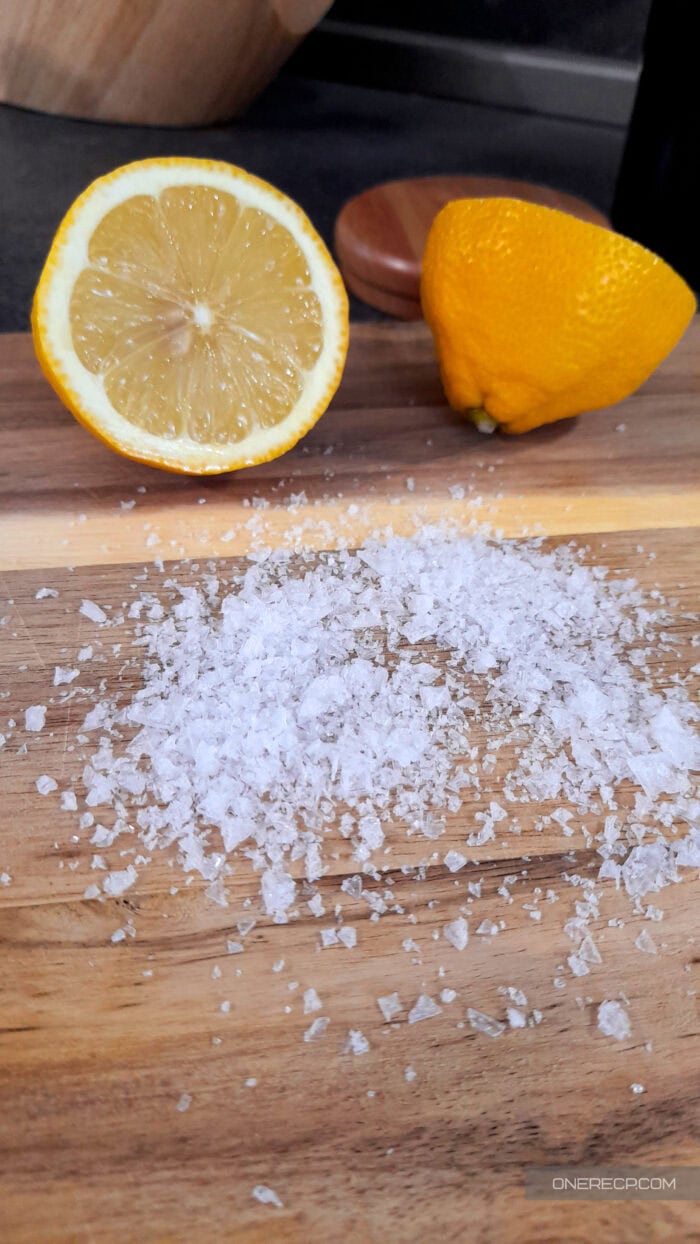
This old kitchen trick is my personal favorite.
Cut a lemon in half, sprinkle coarse salt (like kosher or sea salt) over the board, and use the cut side of the lemon to scrub in circular motions.
The salt acts as a gentle abrasive, while the lemon’s natural acidity helps break down grease and neutralize odors.
Once you’ve scrubbed the entire surface, let it sit for five minutes before rinsing with warm water and wiping dry with a clean towel.
It’s like giving your board a mini spa treatment.
3. Disinfect with vinegar
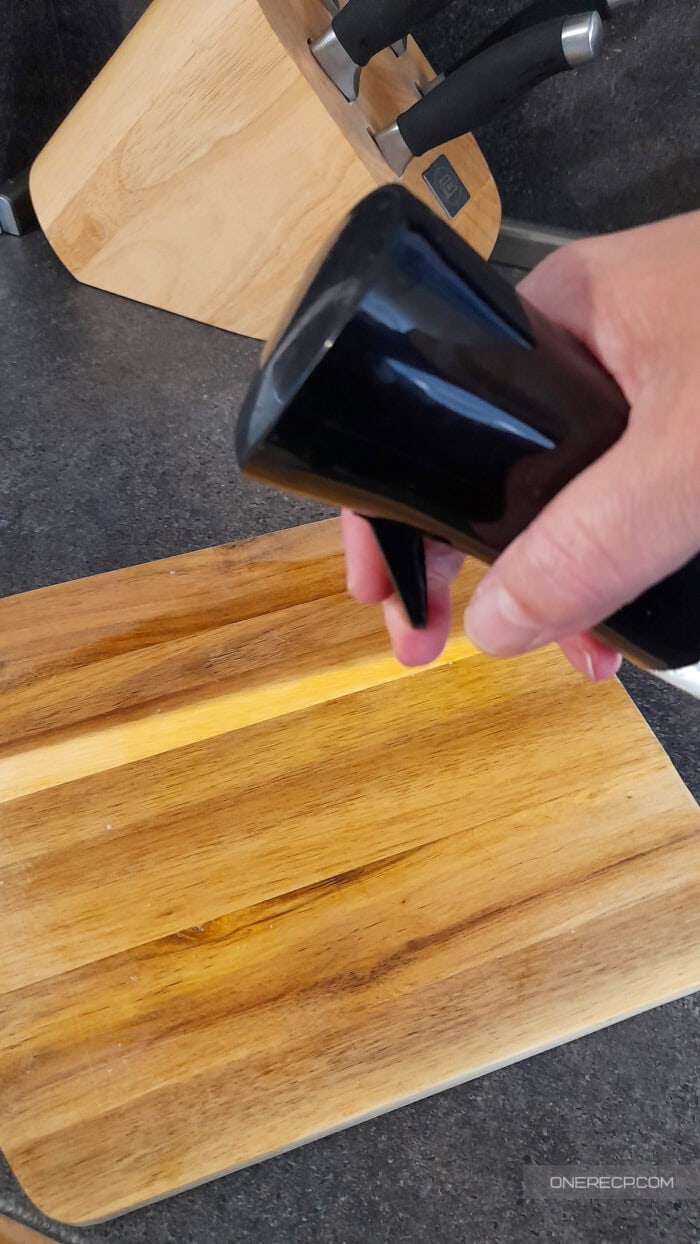
Vinegar is another natural disinfectant that works wonders on wood.
Mix equal parts white vinegar and water in a spray bottle.
Spray the solution over your board and let it sit for a few minutes, then wipe with a damp cloth.
This will help kill bacteria without drying out the wood – and bonus, it removes lingering smells from onions or garlic.
4. Deep clean with baking soda paste
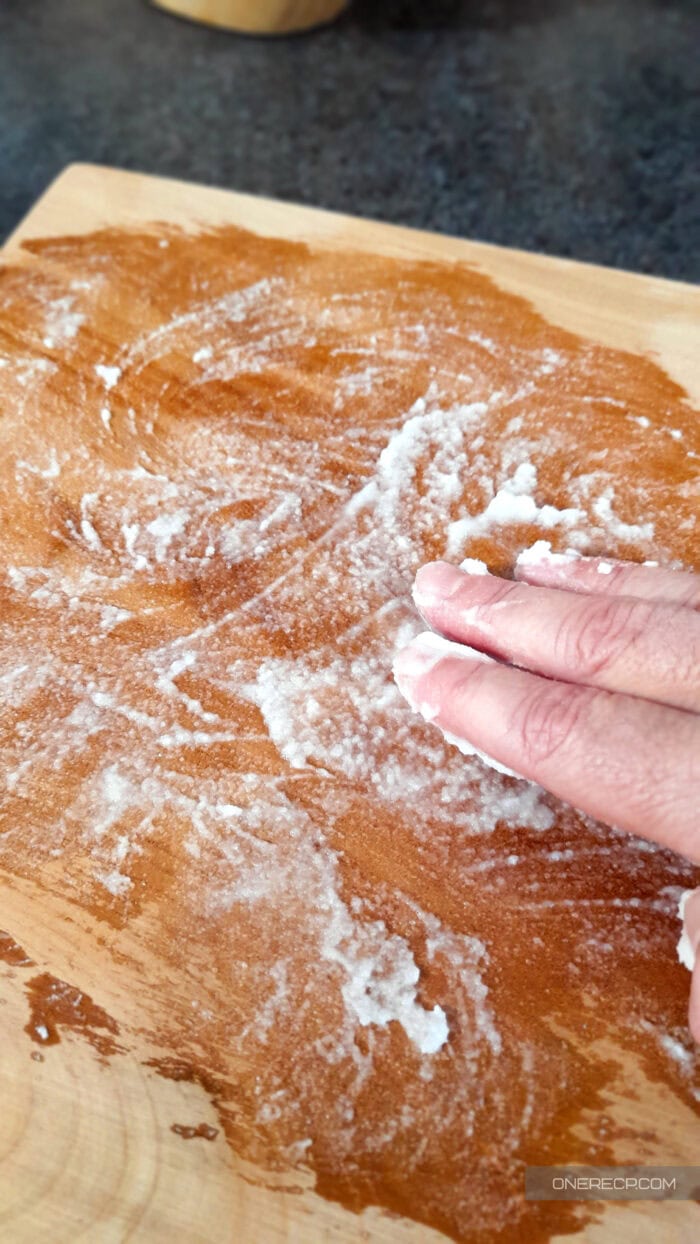
If your board looks stained or greasy, make a paste of baking soda and water (about 3 parts baking soda to 1 part water).
Spread the paste over problem areas and scrub gently with a soft sponge or brush.
Let it sit for a few minutes before rinsing thoroughly.
This helps lift stubborn residue and leaves your board looking brighter and smoother.
5. Dry thoroughly (always)
Never leave your board lying flat while it dries.
Prop it up vertically or on its side so air can circulate evenly around both surfaces.
Leaving moisture trapped underneath can cause mold or warping – two things that’ll ruin even the best cutting board.
6. Condition the wood regularly
Once your board is completely dry, it’s time to moisturize it – yes, like skincare but for wood. If you’d like to see the same process in action for utensils, check out our guide on How to Properly Season Wooden Spoons.
Use food-grade mineral oil, beeswax, or a conditioning mix made specifically for cutting boards.
Rub a generous amount into the surface using a clean cloth, let it absorb overnight, and wipe off any excess the next day.
This keeps the board from drying out, cracking, and absorbing too much liquid the next time you cook.
How often should you clean your wooden cutting board?
Quick rinses and scrubs should happen after every use.
A deeper clean (with lemon, vinegar, or baking soda) once a week is usually enough unless you’re cutting raw meat, in which case, clean it right after.
And don’t forget to oil it at least once a month to keep it healthy and smooth.
Natural Ways to Remove Stains and Odors from a Wooden Cutting Board
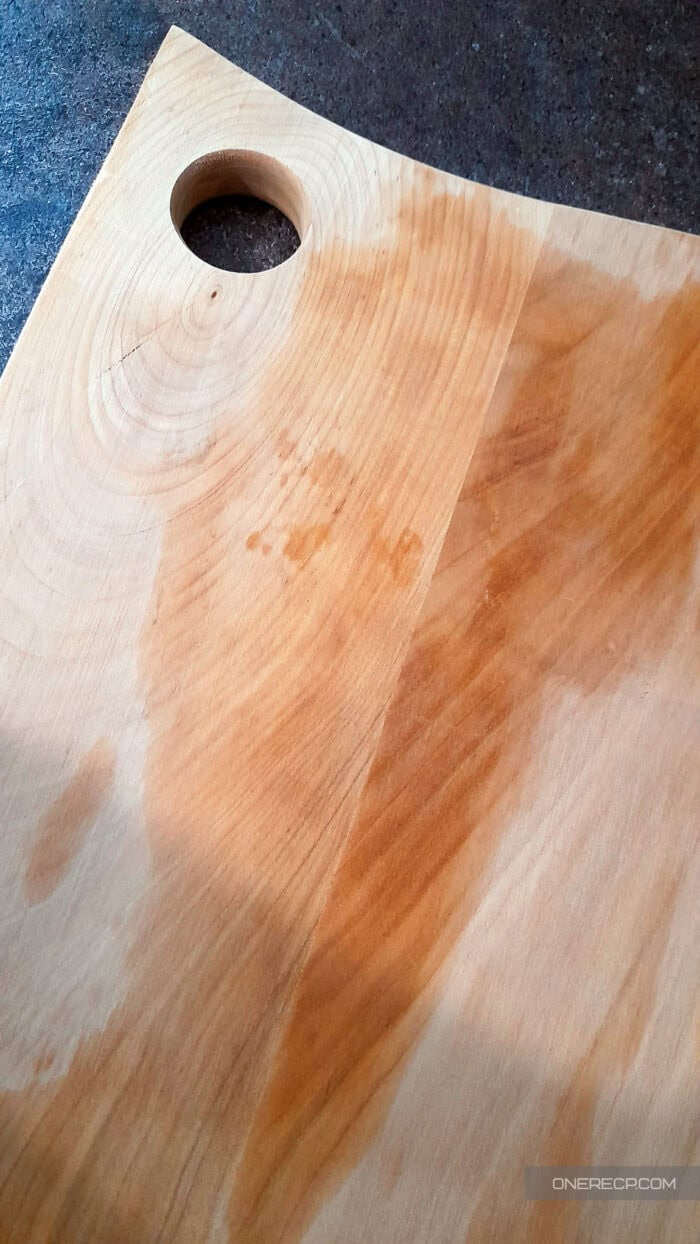
Even the cleanest cutting boards sometimes hold onto strong odors or colorful stains from ingredients like beets, garlic, or fish.
But you don’t need bleach or harsh chemicals to fix that.
Here’s how to handle stains and smells the natural way.
For lingering odors
Sprinkle baking soda over the board, then rub it with a damp sponge or cloth.
Let it sit for 10 minutes, rinse, and dry.
You can also rub it with half a lemon to freshen up the scent.
For tougher smells, wipe with vinegar afterward – it’ll neutralize odors completely.
For dark stains or discoloration
Make a paste of hydrogen peroxide and baking soda (equal parts).
Spread it over the stained area and let it sit for 10 minutes before scrubbing and rinsing.
Just make sure not to do this too often, as it can lighten the wood slightly.
Once it’s dry, oil it again to restore the board’s natural tone.
For greasy spots
Sprinkle cornstarch over greasy areas and let it sit for a few minutes to absorb the oil.
Then wipe away the powder and clean the board as usual.
It’s an easy, chemical-free way to keep your surface looking fresh.
Common Mistakes to Avoid When Cleaning Wooden Cutting Boards
Even with the best intentions, a few cleaning habits can do more harm than good.
Here are some things to watch out for.
1. Don’t soak your cutting board in water
It might seem harmless, but soaking causes the wood to swell and warp.
If you accidentally leave it in water, dry it immediately and condition it to minimize damage.
2. Avoid dishwashers
Dishwashers expose your cutting board to high heat and excess moisture, both of which are wood’s worst enemies.
Hand washing is the only way to go if you want your board to last.
3. Skip harsh chemicals
Bleach, ammonia, and strong detergents can strip away the natural oils from your wood, leaving it brittle and cracked.
Stick to natural solutions like vinegar, salt, lemon, and baking soda – they’re safer and just as effective.
4. Don’t neglect oiling
A dry cutting board isn’t just dull – it’s also more likely to absorb food juices and bacteria.
If your board feels rough or looks chalky, it’s begging for some oil.
Regular conditioning keeps it smooth and water-resistant.
How to Maintain Your Wooden Cutting Board So It Lasts for Years

Cleaning your board naturally is just part of the care routine.
To make sure it lasts for years, you’ll want to maintain it properly between uses too.
Here’s what to keep in mind.
1. Store it upright
Storing your board vertically allows airflow and prevents trapped moisture underneath.
Avoid stacking it under other heavy items, which can cause uneven pressure or warping.
2. Rotate sides
If your board has two usable sides, switch between them regularly.
This keeps both surfaces even and reduces wear in one area.
3. Refresh with a beeswax blend
If you want an extra layer of protection, mix equal parts beeswax and mineral oil, melt them together, and apply as a conditioner.
It forms a light, protective layer that gives your board a subtle sheen and keeps water out.
4. Deal with cracks immediately
Tiny cracks can trap bacteria and water.
If you spot one, sand it lightly with fine-grit sandpaper and re-oil the surface.
For deeper splits, you may need to fill it with food-safe wood glue or retire the board if it’s beyond repair.
5. Disinfect naturally after raw meat
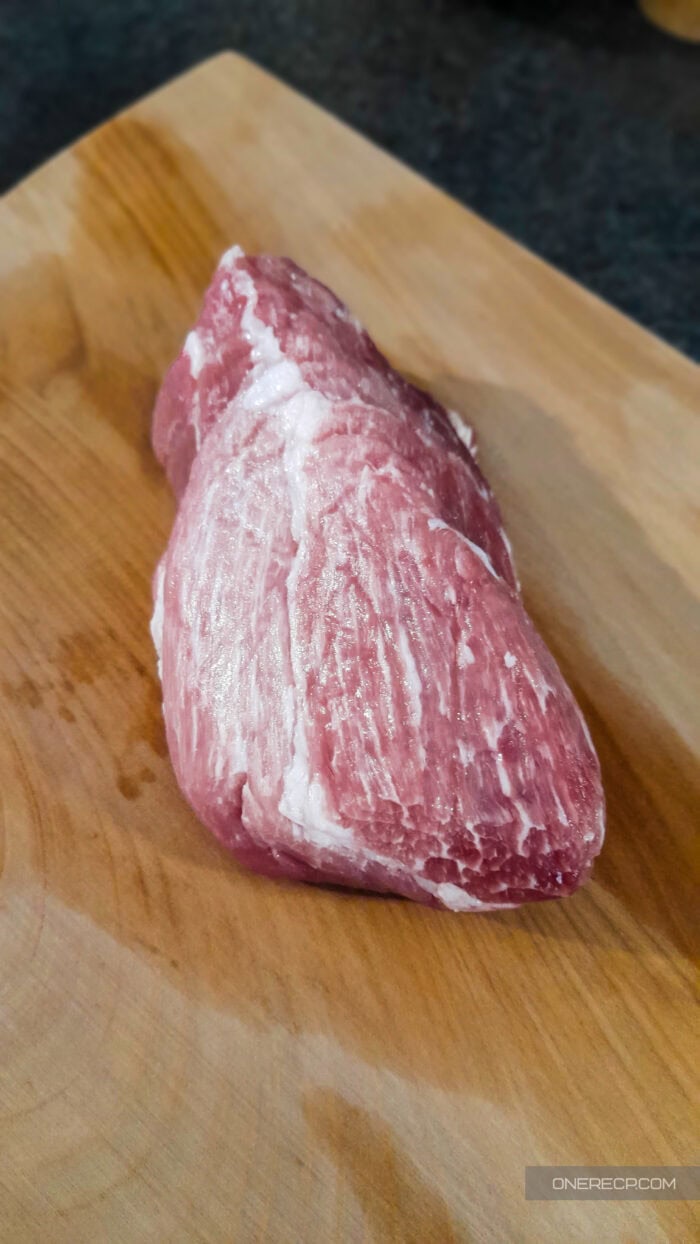
While wooden boards are surprisingly resistant to bacteria due to their self-healing fibers, it’s still best to clean them thoroughly after cutting raw meat.
Spray vinegar or hydrogen peroxide, let it sit for a few minutes, rinse, and dry immediately.
FAQ: Keeping Your Wooden Cutting Board Naturally Clean and Safe
How do I know when it’s time to replace my cutting board?
If your board has deep grooves, cracks, or warped areas that trap moisture or food, it’s time to retire it.
A damaged board can harbor bacteria no matter how often you clean it.
Can I use olive oil to condition my cutting board?
It’s best not to.
Olive oil (and other cooking oils like canola or sunflower) can turn rancid over time and leave your board smelling bad.
Stick to mineral oil or a food-grade cutting board conditioner.
What’s the fastest way to refresh a wooden cutting board?
A quick lemon-and-salt scrub followed by a light oiling is the fastest way to revive your board before guests arrive.
It brightens, deodorizes, and nourishes the wood all in one go.
How often should I oil my wooden board?
Once every few weeks if you use it daily, or monthly if only occasionally.
You’ll know it’s time when the surface looks dry or rough.
Keeping your wooden cutting board clean naturally isn’t just about looks – it’s about protecting your food and preserving one of the most important tools in your kitchen.
With regular care and simple natural ingredients, your board will stay smooth, safe, and beautiful for years.
So the next time someone asks how to clean a wooden cutting board naturally, you’ll know exactly what to say – and show them a board that looks brand new.