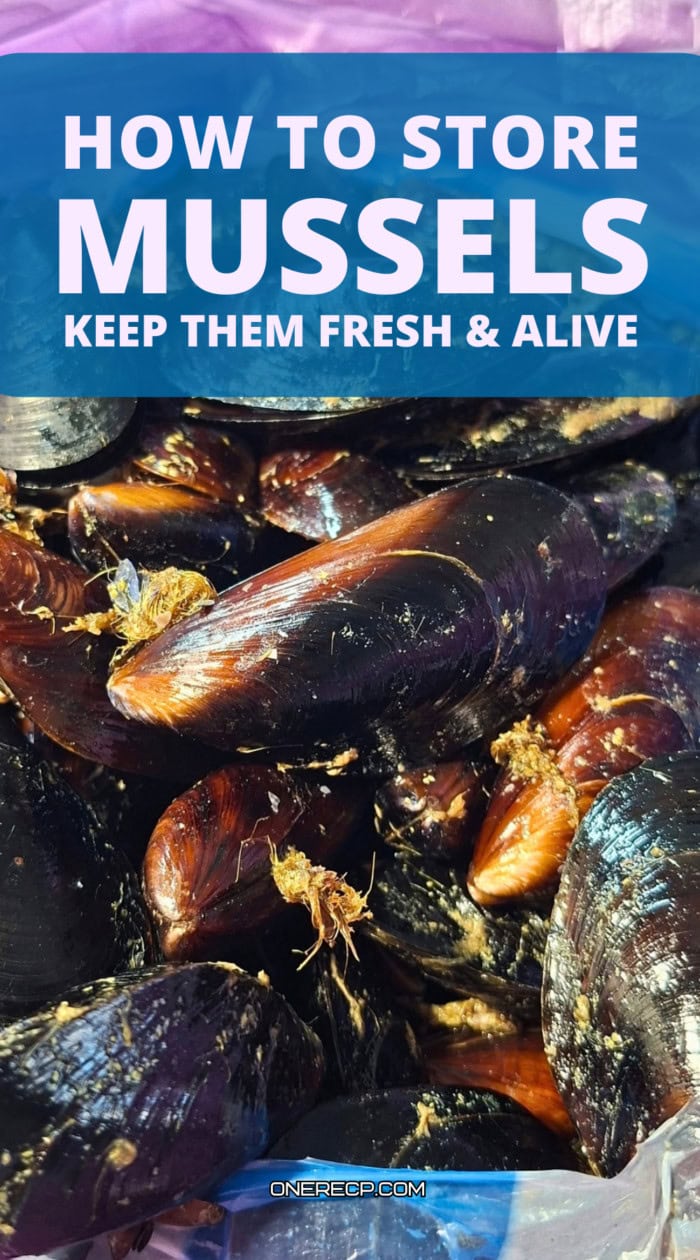
Fresh mussels are alive when you bring them home, so I treat storing them differently from an ordinary package of seafood.
When I’m buying mussels, I pick them up last and head home afterward.
They’re normally in my refrigerator within 10 to 30 minutes.
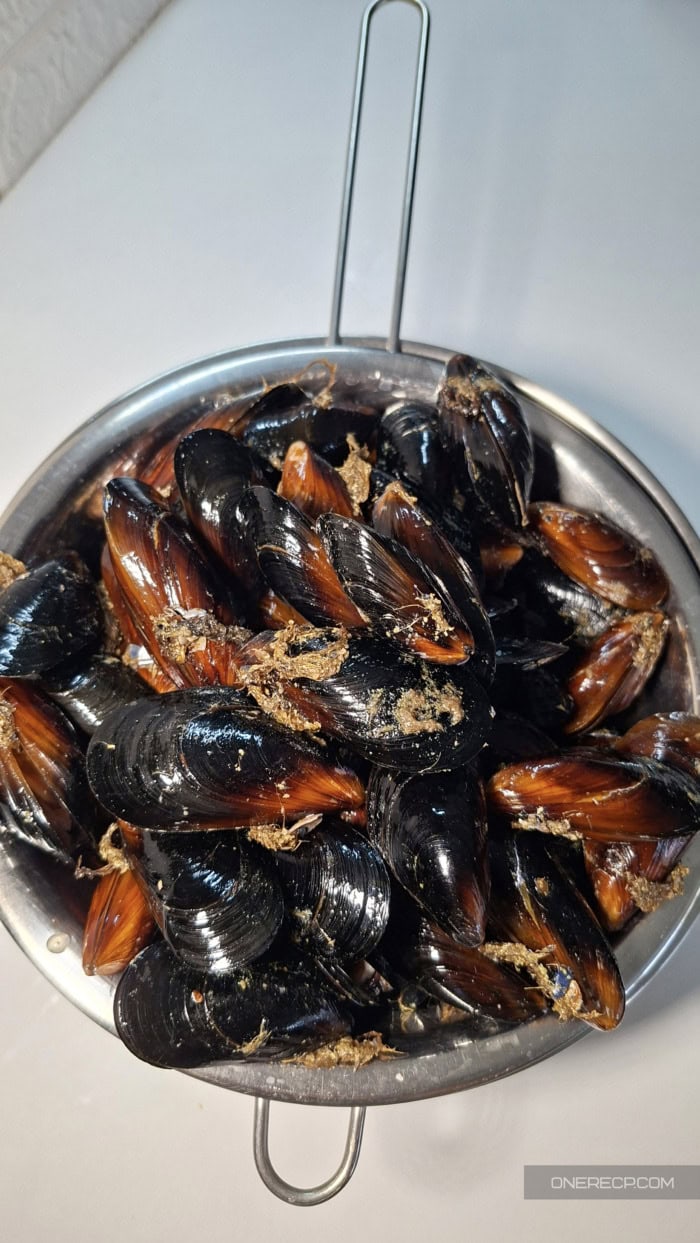
Once home, I take them out of the tightly tied store bags, put them in a colander set over a bowl, cover them with a damp kitchen towel, and refrigerate them until I’m ready to clean and cook.
My own storage time is usually short – I’ve kept live mussels this way for about three hours.
Official recommendations allow longer storage, but they vary considerably, so I’ll explain those separately rather than pretending I’ve personally tested how mussels behave after several days.
How to Store Fresh Mussels in the Refrigerator
Keep live mussels cold, moist but not submerged, and able to breathe.
Here’s how I store mine:
- Take the mussels out of the store bags.
- Put them in a colander set over a large bowl.
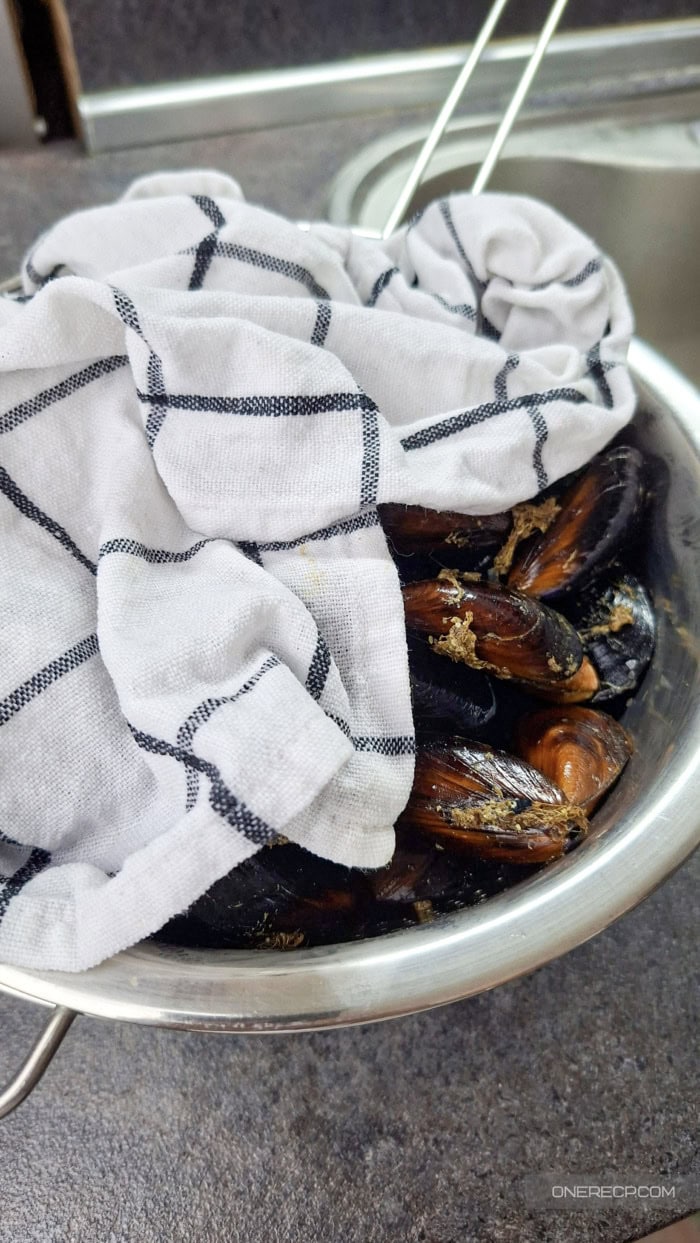
- Wet a clean kitchen towel under cold water and wring it out well.
- Drape the damp towel over the mussels.
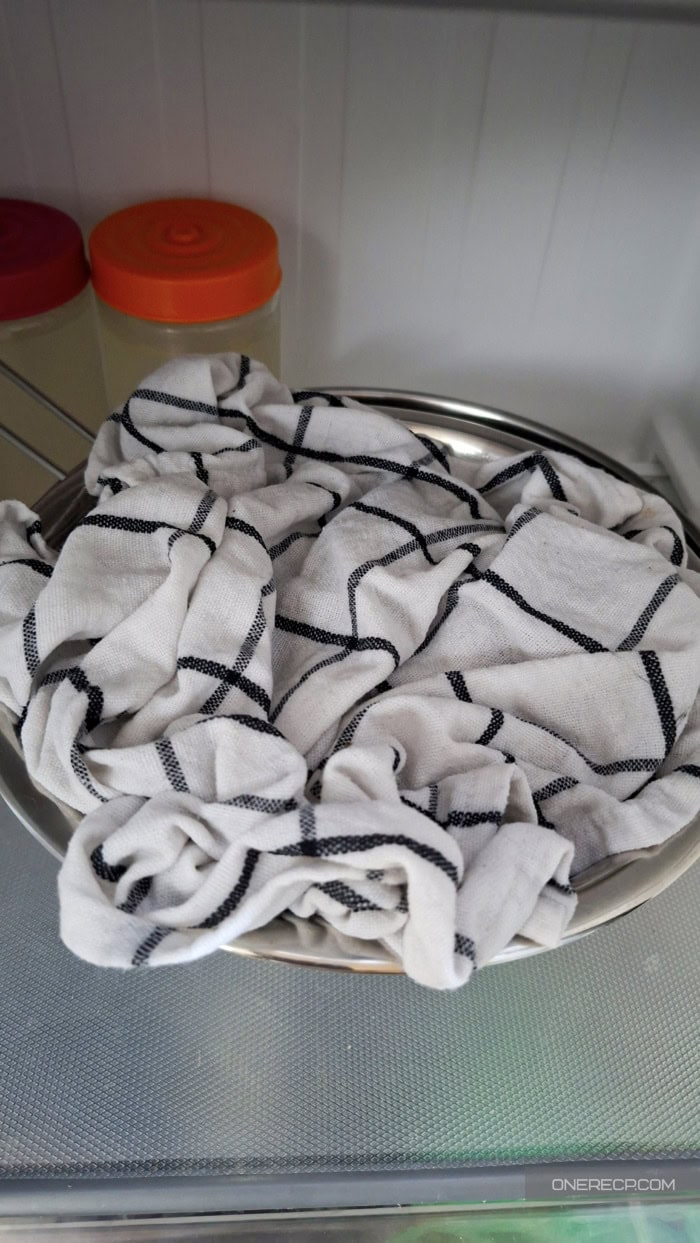
- Refrigerate immediately.
The bowl underneath has a practical purpose.
A small amount of liquid drains from the mussels while they’re refrigerated, and the colander keeps them from sitting in it.
This method is actually something I changed while working on my mussel guides.
I used to leave the mussels in the tightly tied plastic bags from the store, put the bags in a bowl, and refrigerate the whole thing until cooking time.
Now I prefer the colander and damp towel.
That change also brought my method closer to published guidance for storing live shellfish. Health Canada recommends keeping them in an open container or platter, covered with a damp cloth, rather than in a closed container.
How Cold Should Mussels Be Stored?
Keep live mussels refrigerated at 40°F (4°C) or colder.
My refrigerator was set to 5°C (41°F) during this experiment, slightly above the recommended storage temperature. That’s why I distinguish my short-term observations from official food-safety guidance.
The FDA recommends keeping refrigerated seafood at 40°F (4°C) or below.
I also used to put my bowl of mussels on the top shelf whenever possible.
While researching this guide, I changed my mind about that habit.
Raw seafood is better kept on the lowest shelf so any leaking liquid can’t drip onto other foods.
Should You Store Mussels in Water?
No – don’t store live mussels submerged in fresh water.
The damp towel is there to help maintain moisture.
It doesn’t mean the mussels themselves should be sitting in water.
Years ago, I briefly soaked mussels in tap water while getting ready to cook.
I no longer do that.
Health Canada specifically advises against putting live shellfish in fresh water or a closed container, and Maine Sea Grant gives similar guidance for mussels.
Should You Clean Mussels Before Storing Them?
I don’t clean my mussels before storing them.
They go into the refrigerator without being washed, scrubbed, or debearded.
Part of that is simply practical.
I don’t see a reason to take cold live mussels out, spend time cleaning them at room temperature, chill them again, and then take them out once more when I’m ready to cook.
Instead, I clean only the amount I’m going to use and do it immediately before cooking.
How Long Can You Keep Live Mussels in the Fridge?
This is one of those questions where you’ll find surprisingly different official answers.
Maine Sea Grant recommends using refrigerated live mussels within 1 to 2 days for the best quality.
Other government storage guidance gives different windows depending on the source and how shellfish storage is categorized.
For that reason, I wouldn’t treat the longest number you can find online as a target.
My own routine is much shorter.
I normally buy mussels specifically because I’m cooking them that day, and the longest I’ve personally kept a live batch refrigerated before cooking is about three hours.
After those few hours, I’ve noticed more open shells.
The shells can also seem slightly drier, but I haven’t noticed a change in smell during that short storage period.
If you’re buying mussels for a later day, follow appropriate refrigerated-storage guidance rather than using my three-hour experience as a maximum safety limit.
Personally, I prefer buying them as close to cooking time as I reasonably can.
How to Check Mussels After Refrigerating Them
Don’t assume that every mussel that has opened in the refrigerator is dead.
I’ve had mussels that were closed when purchased, opened during a few hours in the refrigerator, and then began closing again when I handled and rinsed them during cleaning.
When I’m ready to cook, I inspect and clean the batch immediately before it goes into the pot.
See How to Clean Mussels for how I inspect open mussels, which ones I discard, and the complete cleaning process.
What If You Can’t Use the Mussels Soon Enough?
My first choice is simple: I try not to create that problem.
I buy mussels when I already know I’m going to cook them, and my normal pattern is buy today – clean today – cook today – eat today.
If plans change and I need the mussels for a recipe the following day, I would rather cook them first than deliberately keep a live batch around for several days.
I clean the mussels, put them in a pot with just enough water to cover the bottom, and cook them until they open.
In my kitchen, this usually takes around 5-7 minutes, depending on the pot and the amount of mussels I’m cooking.
I transfer the cooked mussels to a wide container so they cool more quickly.
Once they’re cool enough to handle, I remove the meat from the shells.
I don’t wait for the mussels to become completely cold before refrigerating them.
The FDA recommends refrigerating cooked perishables within two hours and using shallow containers to help larger amounts cool more quickly.
Depending on the recipe I’m planning, I either refrigerate the mussel meat by itself or keep the strained cooking liquid separately in a refrigerator container.
This isn’t something I routinely do for several days.
This is what I would do if I needed to keep the mussels until the following day, rather than my usual routine.
Can You Freeze Mussels?
I haven’t frozen live mussels in their shells at home.
U.S. cold-storage guidance lists freezing live mussels in the shell as not recommended, so it isn’t a method I use.
I have, however, tested freezing cooked mussel meat.
For one controlled test, I froze three portions:
- 5.6 oz cooked mussel meat by itself in a freezer bag
- 10.3 oz cooked mussel meat with its cooking broth in a freezer container
- 1/4 liter of strained mussel broth by itself in a freezer container
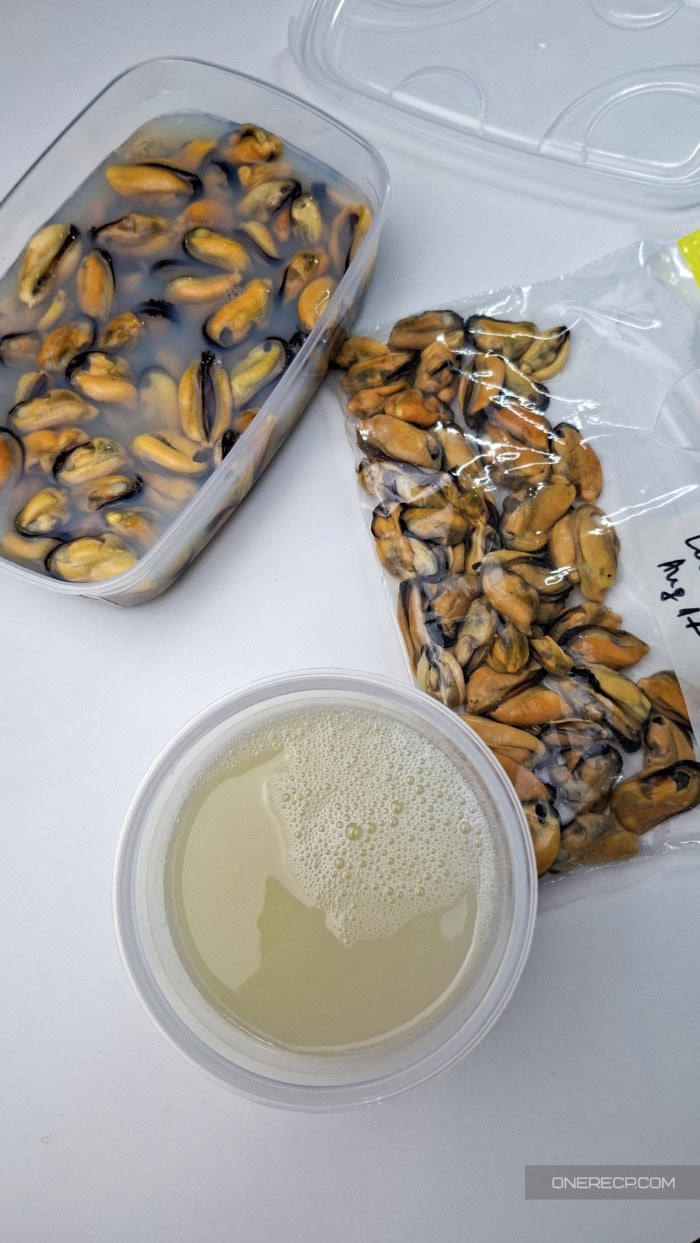
They stayed frozen for 15 days.
I then thawed them in the refrigerator for 24 hours.
The difference wasn’t dramatic, but it was noticeable.
The thawed mussels were still juicy and tasted good, although their texture had changed very slightly and their aroma wasn’t quite as pronounced as when freshly cooked.

The mussels frozen with their cooking broth were the best-preserved batch in my test.
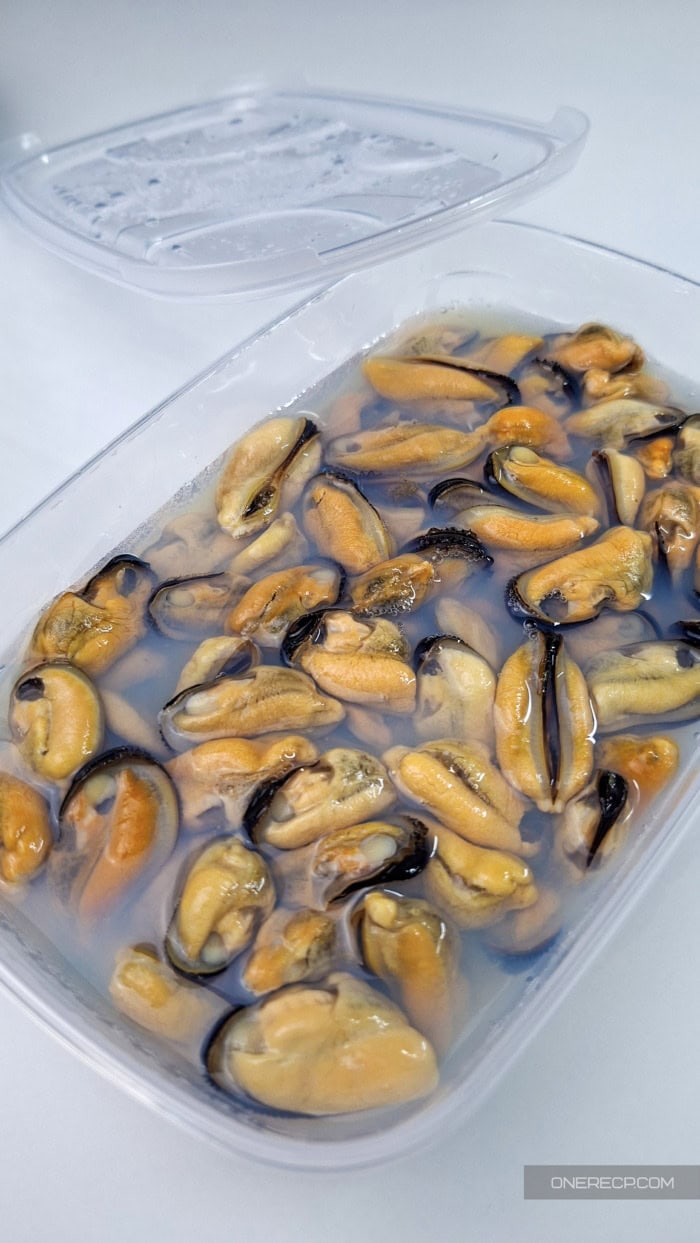
That’s one experiment, not proof that broth will always produce a better result.
But it’s enough to change what I would do in my own kitchen: I wouldn’t choose to freeze cooked mussel meat by itself in a bag again when keeping it with the strained cooking liquid is an option.
I used the thawed mussels successfully afterward.
I’d use them again for dishes such as pasta, salads, or mussels with sauce, particularly when the other ingredients bring plenty of flavor.
For this test, I thawed all three samples slowly in the refrigerator for 24 hours.
That’s also how I’d do it again rather than leaving cooked mussels to thaw at room temperature.
My Practical Rule for Storing Mussels
I don’t buy fresh mussels with the intention of seeing how long I can keep them alive.
Whenever possible, I buy them when I know I’ll be cooking them that day and keep the time between shopping and cooking short.
If you’re cooking soon, keep the mussels alive and properly refrigerated.
If your plans change and you need substantially longer storage, don’t simply keep extending the time because the shells still look acceptable.
Decide whether it makes more sense to cook the mussels or preserve them appropriately instead.